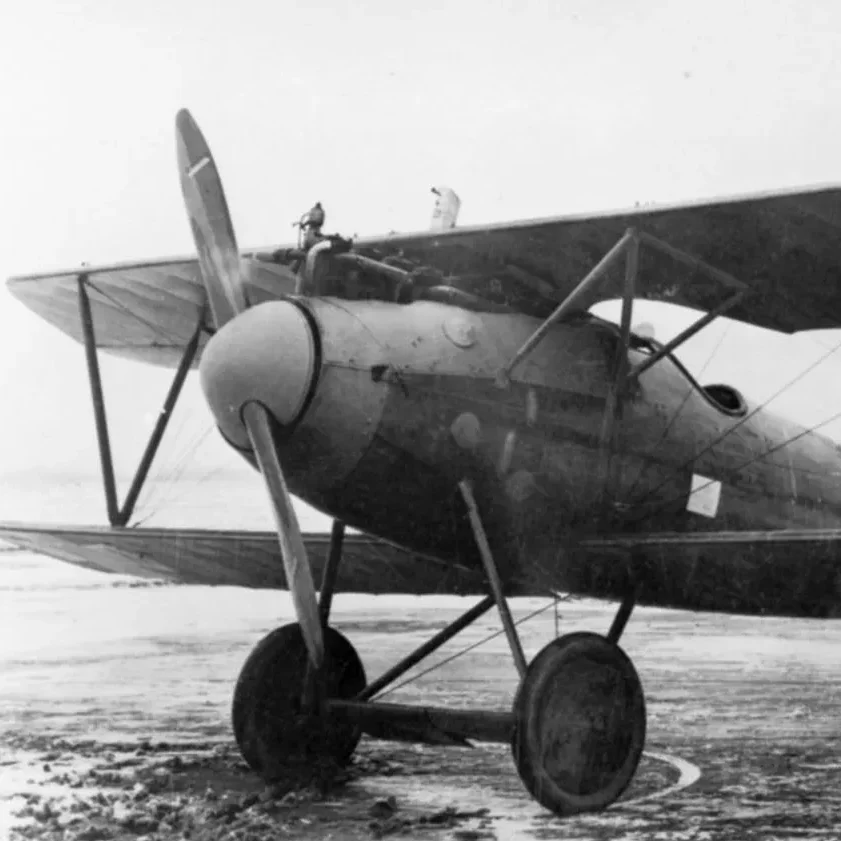
Cause: Why Aviation Emerged in WWI
The emergence of aviation during World War I was largely driven by the need for new forms of reconnaissance and communication on the battlefield. As trench warfare created a deadly stalemate on the Western Front, traditional methods of gathering information—like cavalry scouts and ground observers—became unreliable or impossible. According to The Canadian Encyclopedia, aircraft were first used primarily for observation, helping direct artillery and monitor enemy movements (“The Great War in the Air”). This use gave commanders a bird’s-eye view of the battlefield, offering critical strategic advantages.
As both the Allies and Central Powers realized how valuable this aerial intelligence was, a direct cause-and-effect chain began: the development of better reconnaissance aircraft led to the need to protect them, which in turn led to the development of fighter planes. The National Air and Space Museum describes this as the birth of military aviation, where new technologies like synchronized machine guns transformed reconnaissance planes into deadly weapons of war (“World War I: The Birth of Military Aviation”).
The rapid militarization of aviation was also fueled by political pressure to gain a technological edge. As noted in Ducksters, each side raced to produce faster, more powerful, and more destructive aircraft to gain superiority in the air. National pride and propaganda also played roles; The Canadian Encyclopedia highlights that flying aces—pilots who shot down multiple enemy aircraft—were turned into cultural heroes, motivating governments to pour more resources into aviation (“The Great War in the Air”).
Consequence: How It Transformed Military Strategy and Warfare
The most immediate and significant consequence of aviation in WWI was its transformation of military strategy. What began as a support role quickly became a critical part of offensive and defensive operations. Planes could now deliver bombs directly to enemy lines and disrupt supply routes, and dogfights determined control of the skies. According to Encyclopedia Britannica, the introduction of fighter planes and bombers fundamentally changed the way wars were fought, ushering in a new era of combined arms operations that included air, land, and sea components (“Military Aircraft – Fighters”).
Tactically, the skies became an extension of the battlefield. Commanders had to consider air superiority as a vital factor in planning offensives. As The Canadian Encyclopedia explains, the presence or absence of air support could determine whether a ground assault succeeded or failed (“The Great War in the Air”). This shift in thinking planted the seeds for modern air forces and transformed military doctrine permanently.
Long-Term Consequences: Influence on Global Air Power and Innovation
The longer-term consequences of aviation in WWI were even more far-reaching. The war created a foundation for aerospace innovation that extended far beyond the battlefield. The National Air and Space Museum emphasizes that the technical advancements made during the war—including engine improvements, aircraft design, and navigation tools—laid the groundwork for the aviation boom in the interwar years and beyond (“World War I: The Birth of Military Aviation”).
In Canada, for example, WWI veterans played a vital role in developing the Royal Canadian Air Force (RCAF), which began as a small wartime unit and evolved into a permanent national force by the 1920s. As The Canadian Encyclopedianotes, this institutional legacy reflected how aviation had moved from novelty to necessity (“Royal Canadian Air Force”).
Globally, the war proved that air power was not only a tactical asset, but a strategic one. The consequences extended into World War II, where aircraft became central to warfare. Furthermore, the aerospace industry—sparked by wartime demand and innovation—would eventually lead to civilian aviation, space exploration, and the globalized world we live in today. As the Imperial War Museums explain, the First World War marked the beginning of humanity’s conquest of the skies, and its legacy lives on in every modern airport and air force base.